.gif)
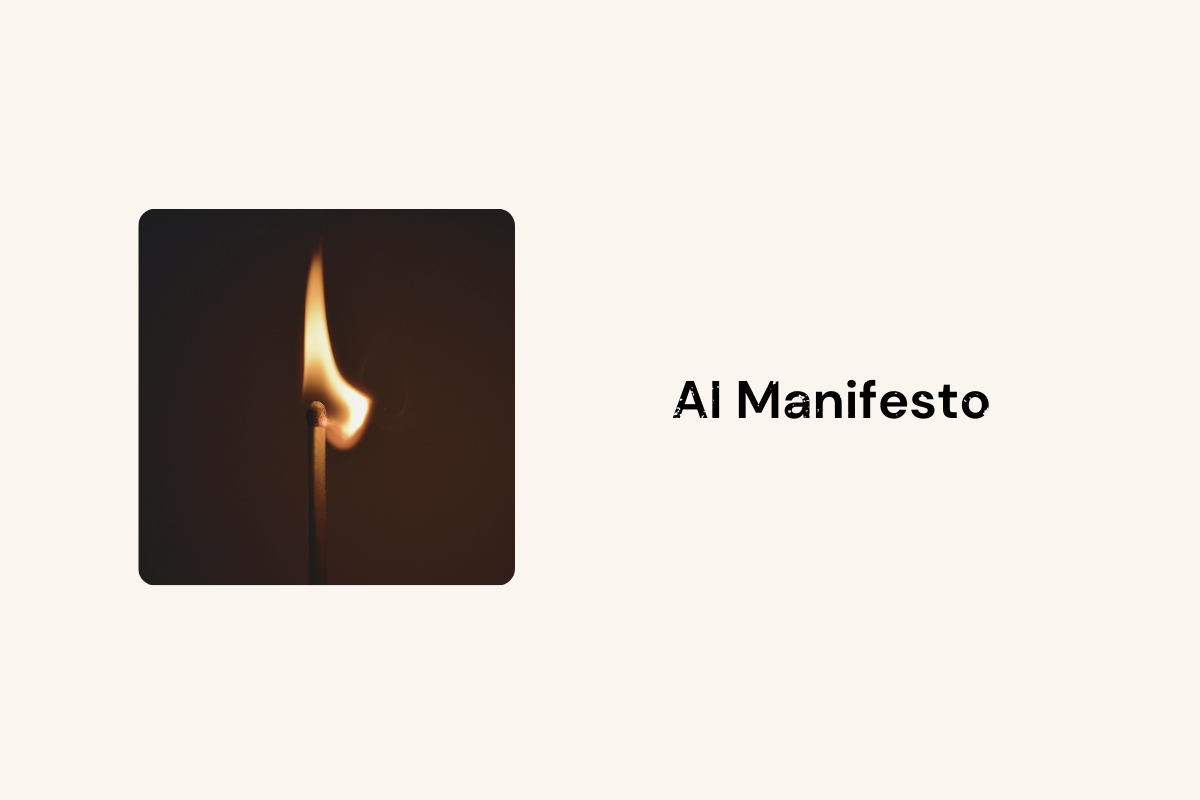
Creativity isn't a product you buy off a shelf. It's that stubborn little ember in every person that refuses to die, even when the world gets louder, faster, and more mechanical. Stories are how that ember turns into fire. Stories are how we remember who we are, where we've been, and who we still might become.
A machine can generate words, sure, but it can't hunger. It can't crave meaning the way a human soul does. It can't chase connection. It can't feel that electric moment when a single line lands in a stranger's chest like, "Yes. That's true."
AI isn't the flame. It can learn patterns, but it can't yearn. It can remix language, but it can't feel the ache that made the language necessary in the first place. That ache belongs to the writer staring down a blank page. To the artist chasing an image that keeps showing up half-formed. To the musician bending sound toward something that feels like prayer.
AI can be part of that process, not as a replacement for longing, but as a tool, as a wick holding the flame, or a lantern that reflects and protects flame to light up the dark.
And yes, some folks are right to be nervous.
They're worried the tool will replace the creativity. That the lantern might snuff out the flame. Or perhaps, even worse, that the lantern itself might catch fire and alight the fragile industry of human creativity, turning stories into factory output: fast, cheap, endless.
That what makes us uniquely human will burn up in a firestorm of synthetic prose and AI slop. They look at the server farms, the energy draw, the heat rising into an already feverish sky. They look at how models are trained—on uncredited labor, on scraped voices, on work swallowed without consent, and they say, "This isn't progress. This is theft wearing a tech hoodie."
These fears aren't imaginary. They're warnings. Ignore the smoke and you'll burn down the house.
So I'm not here to answer concern with a shrug. I'm here to answer it with responsibility, and with vision.
If we're going to use these tools, we don't get to be childish about it. AI needs standards that honor the planet it runs on: cleaner energy, smarter infrastructure, and a ruthless push toward efficiency that helps the earth instead of draining it.
Creative communities deserve protection: clear consent, fair compensation, and transparent systems that recognize the human hands behind the datasets, and the cultures that gave birth to the stories in the first place.
Using AI shouldn't mean bowing to it.
It should mean insisting the tools we build are worthy of the beauty (and the pain) they're being asked to touch.
But here's what I know about writers: we're not fragile. We're problem-solvers. We're makers. We're stubborn.
The writer of this century isn't a lonely genius in a tower. He's a conductor in a storm of possibility.
Yes, AI can whisper a first line when your brain locks up.
Yes, it can give you ten variations of a scene so you can feel, by contrast, which one actually has a pulse.
Yes, it can help map worlds, test structure, brainstorm names, tighten blurbs, catch continuity, find the word that's sitting just out of reach.
Yes, it can take some of the drudgery off your plate so you can spend more time on the sacred work: revision, depth, character weight, the hard choices that make a story yours.
But let's be crystal clear: the heartbeat in the work is the choice: The decision to keep a slightly crooked sentence because it sounds like a real human voice. The decision to leave silence where a machine would fill the gap. The decision to write imperfectly and whole you when a model might smooth down the edges.
Creating with AI still means saying, this is my story.
Only the human knows which "imperfections" are actually fingerprints.
So here's my vow, to myself, to the technologists, and to the world:
AI won't erase writers. It'll dare writers to go further.
It will give the shy storyteller a way to experiment without shame, to draft badly and bravely, because there's a patient collaborator standing by to help you refine, reorganize, and sharpen.
It can widen the gate so more voices enter the conversation, voices from places and histories that have been pushed to the margins. It can help translate, remix, reimagine, and lower barriers so people who were never handed the "proper" tools can still make something real. The danger isn't that too many people will create. The danger is that the systems around them won't honor their humanity. That's where we keep our eyes open and our spine stiff.
Creativity isn't going obsolete. It's experiencing its latest evolution.
The pen didn't kill the storyteller.
The camera didn't kill the painter.
And the keytar certainly didn't kill the musician.
Every new tool of the past upset old habits and then opened new ground, new genres, new forms, new ways of conveying the same human feelings. AI is the next iteration.
Rejecting AI outright can mean refusing an instrument that, used well, might help uncover stories we haven't even learned how to name yet.
But accepting it blindly? And you risk neutering your voice.
So this is where I stand: the third space.
Eyes open. Heart open. Hands open.
I believe in a future where writers sit down like navigators, charting routes through seas of data without forgetting the compass is human longing.
I believe in intellectual property rights that protect creators and laws with teeth sharp enough to bite exploitation.
I believe artists should hold each other accountable for how these tools are used.
And I believe any system built on stolen work is an unfinished system, and the story of AI and art isn't complete until justice is stitched into the foundation.
Most of all, I believe in the stubborn, radiant ember of the human imagination.
When a person writes, they do more than arrange symbols. They offer up themselves. No model can replace the risk of that offering, the decision to take a private bruise and turn it into a character, to take a whispered doubt and make it a plot, to take a fragile hope and stretch it across three hundred pages so somebody, somewhere, feels less alone. AI can help with the scaffolding. It can help with the architecture. It can illuminate and suggest. (See how this works in practice with Twig's AI developmental edit.)
But the courage to say, "This is mine. This is me. This matters," will never be mechanical.
So here's the pledge:
- Use AI as a tool, not a replacement.
- Pressure companies to honor the planet that bears the weight of our computation.
- Challenge lawmakers to defend the rights and livelihoods of the creators whose work trains our machines.
- Welcome new voices by lowering barriers, not standards.
- Remember that behind every prompt stands a person willing to be changed by what they make.
The future of art isn't a cold automated wasteland where human stories go quiet. It's a wild, intricate garden.
To every writer, artist, and maker standing at this threshold: don't step back. Step through.
Bring your ethics.
Bring your tenderness.
Bring your rage at injustice.
Bring your insistence on credit and consent.
Bring your reverence for the earth.
Bring your secret stories and your loud ones.
Let the tools get sharper, but let your conscience get sharper, too.
And most of all, let your imagination remain the wildest, brightest flame in the room.
This is the manifesto:
We are not being replaced.
We are being invited.
And we choose to accept that invitation with open eyes, fierce compassion, and an unshakable belief in the irreplaceable spark of the human soul.